How did Wisconsin become a leader in cheese production?
This article examines the industrial dominance of Wisconsin's dairy sector. It explores how the state maintains its position through massive production volumes and diverse varieties, while noting that historical shifts in farming and market needs shaped this landscape. Key takeaways include the state's significant share of national cheese production, its historical rise to leadership, and the specialized production of unique varieties.
How did Wisconsin become a leader in cheese production?

A farmer looks over a vast, rolling pasture at dawn, where the legacy of dairy farming meets modern industry. Wisconsin established itself as a central hub for the dairy industry through decades of specialized development and high-volume output.
According to the Dairy Business Innovation Center, cheese advocates sought to increase the production of artisan cheese in the state in the early 2000s, leading to the creation of the Dairy Business Innovation Center in 2004.
According to the Machine Wisconsin Milk Marketing Board, the history of cheese in Wisconsin reflects the rise of cheese in America's Dairyland.
The state became the largest producer of cheese in the United States during the early 1900s. By 1919, the state's production capacity had surged to the point where it produced more than 63% of all cheese made in the United States.
This historical momentum established a foundation for the massive industrial capacity seen in later years.
The state's dominance is reflected in modern output. In 2019, Wisconsin manufactured 3.36 billion pounds of cheese, which accounted for 26% of all cheese produced in the United States and was more than any other state. This level of production demonstrates the scale of the local industry.
What defines the current scale of Wisconsin cheese production?
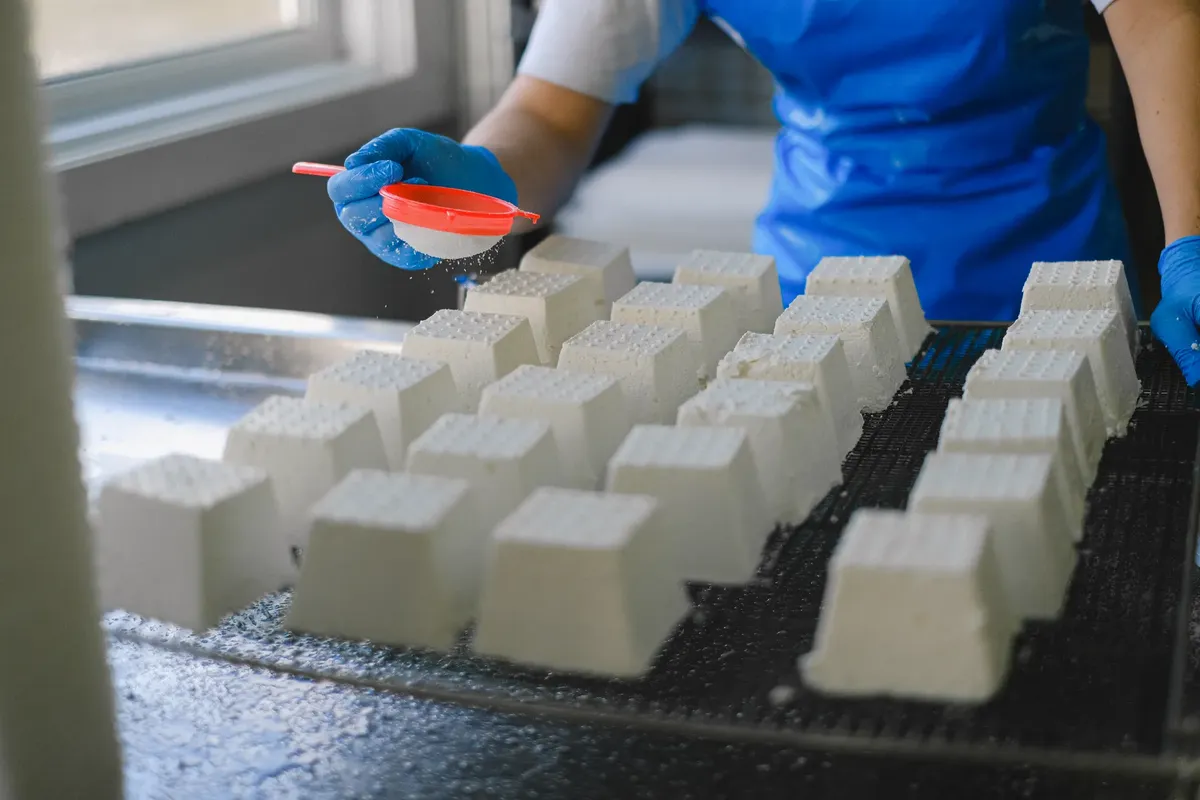
A worker at a large-scale facility monitors automated vats, processing thousands of pounds of milk every hour. Current statistics highlight the massive volume that defines the state's economic footprint.
The scale of the industry is evident in recent data. As of 2024, Wisconsin was the largest cheese-producing state in the U.S., responsible for 25.2% of the country's total cheese production. This significant portion of the national market underscores the state's primary role in the dairy sector.
The sheer volume of production remains a defining characteristic. In 2019, the state produced 3.36 billion pounds of cheese. This high output supports a wide range of consumer needs across the country.
How diverse is the cheese produced in the state?
A cheesemaker carefully inspects a wheel of artisanal cheese, checking the texture and rind for quality. While industrial production is high, the state also supports a vast array of specialty products.
Variety is a core strength of the local industry. By 2018, Wisconsin cheese factories produced more than 600 varieties of specialty cheese, which represented approximately 50% of all specialty cheeses made in the United States.
This diversity allows the state to lead in both mass-market and niche segments.

The variety within the state is also significant. Within Wisconsin, mozzarella accounts for 31% of all cheese produced, while cheddar accounts for 21%. These specific types represent a large portion of the total output.
What are the specific characteristics of the cheese industry?
A cooperative manager oversees a small-batch production line, ensuring traditional recipes are followed. The industry is characterized by both massive volume and the preservation of specific, unique varieties.
The industry's unique identity is seen in specialized products. As of 2020, the only cheese factory that produces limburger cheese in the United States is the Chalet Cheese Cooperative in Monroe. This type of specialized production keeps specific traditions alive.
The industry also evolved through targeted support. Cheese advocates sought to increase the production of artisan cheese in the state in the early 2000s, leading to the creation of the Dairy Business Innovation Center in 2004. This initiative helped foster the growth of specialty products.
How does the dairy sector impact the state's economy?
An economist reviews spreadsheets of agricultural yields and market shares to understand the regional impact. The dairy sector is a cornerstone of the state's economic identity and historical development.
According to the Wisconsin Historical Society, caring for cows saved our soil, created our landscape, brought prosperity to our state, and still shapes our way of life in Wisconsin (Wisconsin Historical Society, 2011).
The economic impact is tied to the sheer volume of production. As of 2020, Wisconsin produced 26% of all cheese in the US, totaling 3.39 billion pounds of cheese in the last year. This output represents a massive portion of the national supply.
The state's dairy-centric history shaped its current economic profile. By the start of the 20th century, over 90% of farms were dairy. This widespread involvement in dairy farming created a robust and integrated economic structure.
What are the limitations of these production statistics?
A researcher compares different datasets, noting how different years and definitions can change the perceived market share. Understanding the context of the data is necessary for an accurate view of the industry.
The data can vary based on the specific year and the metrics used. For example, while the 2019 figure shows a 26% share, the 2024 data shows a 25.2% share. These fluctuations reflect changing market dynamics and production levels.
The scope of the data is also subject to the specific timeframe being studied. Some statistics focus on specialty cheeses, while others focus on total volume, meaning they cannot be directly compared without context.
| Metric | 2019 Data | 2024 Data |
|---|---|---|
| Total Cheese Production (lbs) | 3.36 Billion | Not Specified |
| Share of US Total Production | 26% | 25.2% |
I find that comparing these specific annual percentages helps clarify how the market share has shifted slightly over time.
- How did Wisconsin become a leader in cheese production?
- What defines the current scale of Wisconsin cheese production?
- How diverse is the cheese produced in the state?
Wisconsin cheese production stats
The subject here is Wisconsin cheese production stats.
The same subject is also called US cheese industry data.
The same subject is also called Dairy sector statistics.
This part also covers Dairy farming census.
Related
- How did early cheese ripening techniques work?
- Wisconsin cheese production share: Guide to industry trends
How does the article examine the industry's evolution?
The article examines the industrial dominance of Wisconsin's dairy sector by tracing its rise from a regional producer to a national leader. This examination covers the shift from early 20th-century growth to modern market presence.
The article also explores how the sector balances high-volume output with the preservation of unique, small-batch traditions.
What does the article examine regarding the market's structure?
The article examines the market structure by comparing different years of production data. This comparison highlights how market share percentages shift between years, such as between 2019 and 2024. The article uses these figures to illustrate the dynamic nature of the national cheese market.







Comments 0