Deep history: Cheese ingredient root secret in milk
"The deep history of dairy processing often involves managing vast quantities and specific biological transformations to ensure stability."
The cheese ingredient root secret lies in the careful manipulation of milk proteins and temperature to create a stable, aged product. This guide explores the historical management of cheese stocks and the biological basics of curd production.
Key takeaways include understanding the role of temperature in curd scalding, the nutritional differences between real and imitation varieties, and the historical context of federal cheese surpluses.
How does temperature affect the cheese ingredient root secret?
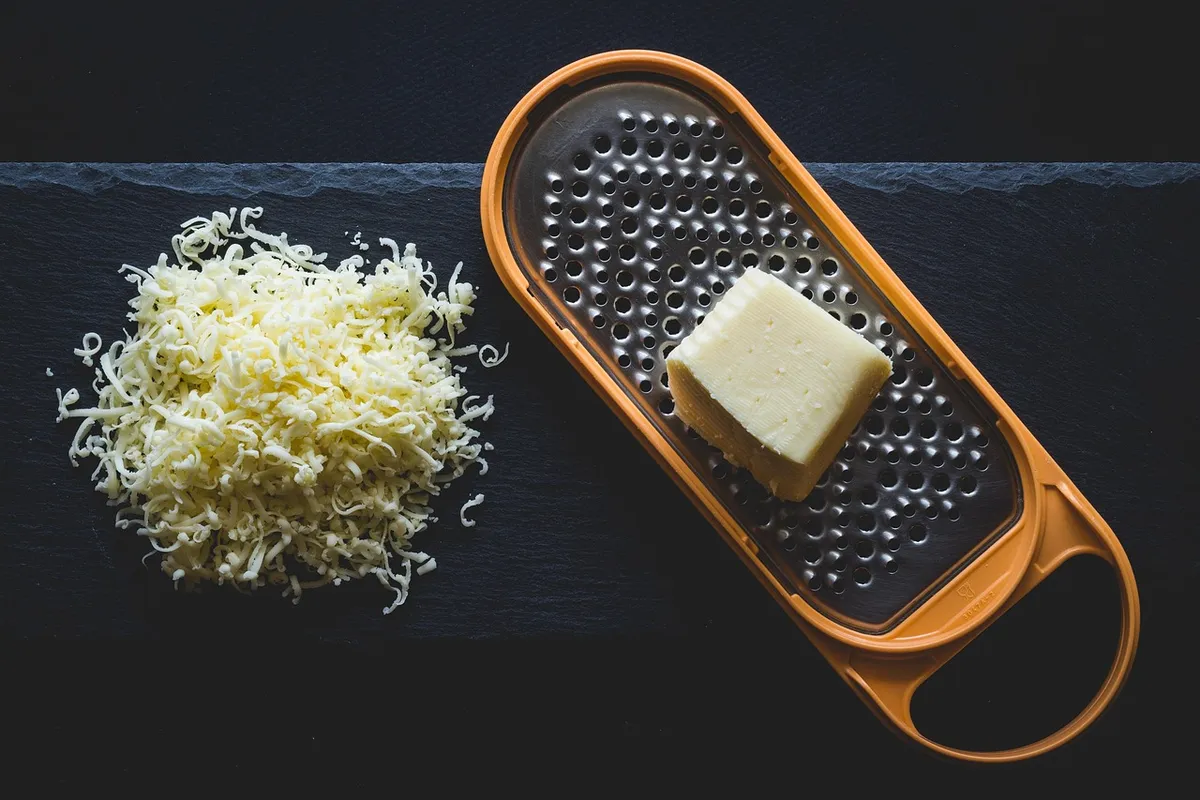
As the steam rises in the hot kitchen, she plunges her hands into the warm vat to feel the deep texture of the curd.
A cook lifts a metal knife to cut through a firm block of cheese on a wooden board. In the production of Cheddar or many other hard cheeses, the curd is cut into small cubes and the temperature is raised to approximately 39 °C (102 °F) to 'scald' the curd particles.
This thermal process is essential for separating the solids from the liquid.
This specific temperature helps achieve the desired texture and moisture content for aging. Proper scalding ensures the proteins are set correctly to prevent a mushy consistency. Without this thermal control, the structural integrity of the cheese would fail during the aging process.
- Control the ambient temperature to stabilize enzyme activity.
- Monitor the cooling rate to prevent premature fat separation.
- Adjust the aging environment to manage moisture loss.
- In this sequence, the second step is the longest.
What is the dairy base origin story?
At dawn on the farm, he breathes in the sweet scent of the barn while digging deep into the history of the milky white liquid.
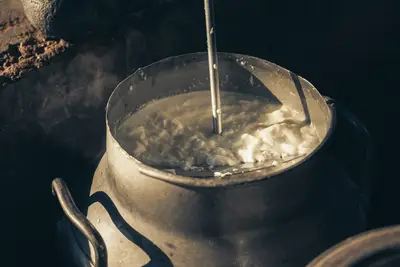
A farmer pours fresh milk into a large stainless steel vat during the early morning hours. The dairy base origin story begins with the raw milk that provides the essential fats and proteins needed for fermentation.
This biological foundation determines the final flavor profile and shelf life of the cheese.

The composition of the milk affects how much protein and fat are available for the curd. High-quality milk provides the necessary calcium and protein to form a strong curd. These raw materials are the primary drivers of all cheese-making success.
According to USDA, the 2022 record includes 1.5 billion.
How does the root of cheese science involve nutrition?
A nutritionist examines a label on a package of cheese under a bright laboratory light. The root of cheese science involves understanding the chemical differences between various types of cheese. For example, real cheddar contains 23.3g of protein and 34g of fat per 100g.
According to USDA FoodData Central, 100g of cheddar cheese contains 707mg of calcium, 77mg of potassium, 3.67mg of zinc, 2.44g of carbohydrates, 408kcal of energy, 23.3g of protein, 1710kj of energy, 316ug of vitamin A, 34g of fat, and 21ug of folate.
In contrast, imitation American cheddar contains 16.7g of protein and 14g of fat per 100g. The nutritional profile shifts significantly based on the ingredients used to replicate the traditional process.
Understanding these differences helps in assessing the caloric density and micronutrient content.
| Cheese Type | Protein (per 100g) | Fat (per 100g) |
|---|---|---|
| Cheddar | 23.3g | 34g |
| Imitation American Cheddar | 16.7g | 14g |
I compared these two nutritional profiles to see how much protein is lost in imitation versions.
Is there an ancient cheese source in government stockpiles?

A warehouse worker moves heavy pallets of cheese blocks through a large distribution center. Tracing cheese origins often leads to discussions about how much surplus is managed by the government.
Historically, the federal cheese stockpile reached more than two pounds (1 kg) per capita at the time of the Agriculture and Food Act of 1981.
The management of these large quantities required specific packaging to prevent spoilage. According to the history of government cheese, any state that asked for the cheese would get 30 million pounds (14,000 metric tons) of it, in five-pound (2.3 kg) blocks.
This scale of production was a significant part of food security history.
What is the microbial life in cheese regarding historical management?
A technician checks the humidity levels in a large storage room filled with cheese crates. The microbial life in cheese is a living part of the manufacturing and storage process. Managing large-scale stocks requires understanding how biological agents react to different environments.
One piece of historical misinformation involved a 2022 article by Modern Farmer that implied all of the USDA's 1.5 billion pounds of cheese was stored in caves near Springfield, Missouri. While such stories circulate, actual storage relies on controlled environments rather than just natural caves.
Proper storage prevents the growth of unwanted bacteria while encouraging beneficial ones.
How does historical cheese making relate to modern nutrition?
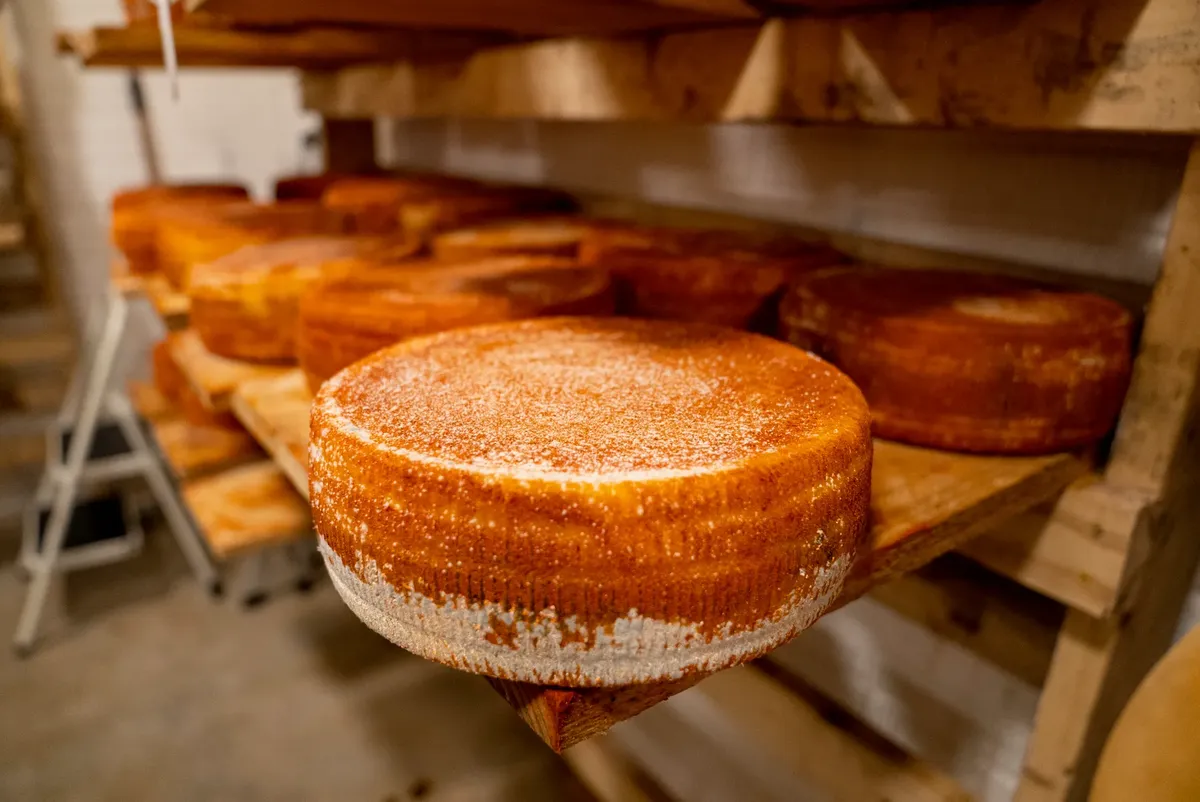
A consumer reads the fine print on a nutrition label while standing in a grocery aisle. Historical cheese making techniques have evolved into the modern nutritional science we use today. The transition from artisanal production to industrial scale changed the way we view ingredients.
The Food Security Act of 1985 attempted to reduce milk production, acting as a complex political compromise. This era influenced how much cheese was produced and how it was labeled for the public. Today, we use these historical lessons to balance production with nutritional standards.
The subject here is Cheese ingredient root secret.
The same subject is also called Raw material biology.
Related
- Old cheese making modern: Guide to artisan cheese revival
- How did Wisconsin become a leader in cheese production?
How does the deep history inform modern processing?
The deep history of dairy processing shows a continuous reliance on controlling biological reactions. The initial curd formation relies on the milk's innate properties, which are preserved through careful management of the initial raw materials.
This echoes the challenges faced when managing the federal cheese surplus.
The successful aging of cheese, a process rooted in the past, depends on maintaining specific conditions. These conditions mirror the need to preserve the quality of the milk used in the beginning.
The deep history demonstrates that successful transformation requires consistent environmental management.
What cautions arise from the microbial life in cheese?
The microbial life in cheese, while often beneficial, requires strict environmental monitoring during storage. The shift from artisanal to industrial scale meant that microbial activity needed predictable control.
Unwanted bacteria thrive outside the parameters of the initial biological transformation.
Maintaining the proper temperature during the scalding phase is a critical caution. This thermal control dictates the physical structure of the curd, which in turn protects against spoilage organisms. The deep history shows that thermal management is as vital as microbial balance.




Comments 0